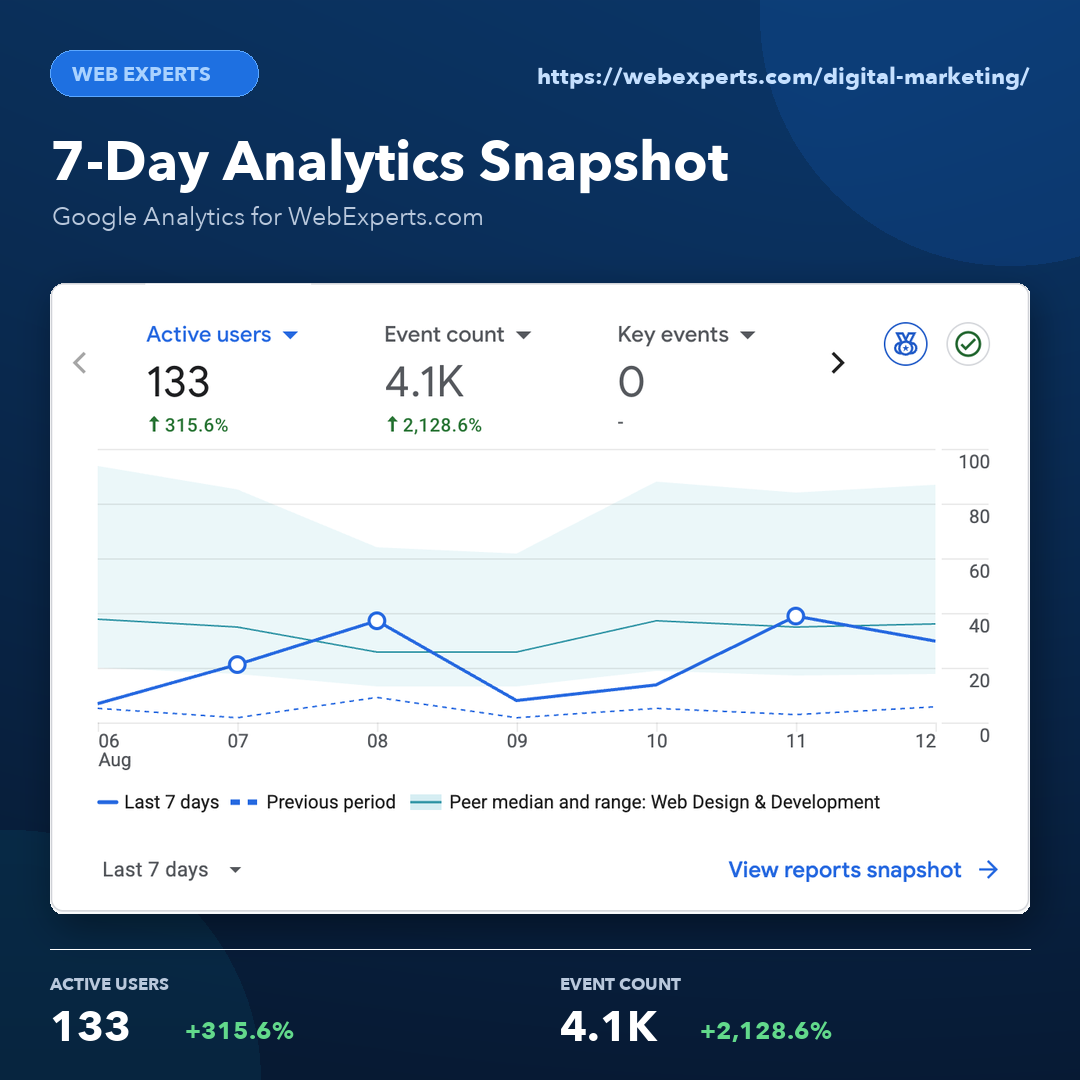
If a marketing company promises a 300 percent increase in users and a 2,000 percent increase in engagement, skepticism is reasonable. Those numbers sound too good to be true. That is exactly why the distinction between a promise and a measurement matters.
The seven-day snapshot
After restructuring and redesigning WebExperts.com, the following seven-day period recorded 315.6 percent growth in active users, 2,128.6 percent growth in event count, 92.5 percent of visitors from the United States, and three actionable leads.
Those figures are a snapshot, not a guarantee and not a universal formula. They show what happened during one measured period after a significant body of work.
A website alone does not create engagement
AI can generate a polished one-page website. It cannot automatically create an audience that cares, understand decades of client context, or decide which part of a company’s value needs to be clearer.
Engagement came from work behind the interface: revising structure, improving content, building useful tools, understanding search behavior, and making the site easier for both traditional search engines and emerging AI systems to process.
The work compounds
Clients have told us about stronger business after redesigns, steadier qualified leads from the marketing systems we built, and less spam after moving into our hosting environment. None of those outcomes came from a single visual change. They came from many connected decisions made over time.
Measure before making the claim
Good digital marketing is not about producing the most exciting promise. It is about doing the work, defining what matters, and measuring what changes. The number is useful only when the method and timeframe remain attached to it.